
3 Reasons to Replace Alcohol with Cannabis
At the time of this writing, we’re smack in the middle of the holiday season. Birds will be roasted, tables will be set, and the wine will be poured… and poured… and poured. In fact, some experts estimate Americans drink twice as much during the holiday season as they do the rest of the year.
But booze isn’t the only mind-altering substance available to enhance your festivities. If you’re looking to avoid potential pitfalls or next-day regret, here are three reasons why cannabis might be the holiday alcohol alternative you’ve been looking for.
1. Cannabis makes food more enjoyable.
If there’s one thing most people know about cannabis, it’s that it can give you “the munchies.” This very real biological phenomenon occurs because THC molecules stimulate your CB1 endocannabinoid receptors, which are responsible for sending hunger signals to your brain.
Not only does THC help you get hungry enough for seconds (or thirds), but it may also make the food you’re eating taste better. If you’re a habitual consumer, you likely don’t need a scientific study to back this claim, but we have one for you anyway. As reported by Psychology Today, a 2012 study published the journal of Neuropharmacology demonstrated increased levels of dopamine in subjects who consumed sweets under the influence of THC.
While increased appetite isn’t always ideal, the holidays are about carving out as much stomach space as possible to sample all the seasonal delights. A little pre-dinner canna-consumption can make it possible for you to get the most out of your festive feast!
Finally, THC is effective at relieving nausea – after all, one of its chief medical uses is to help cancer patients cope with chemo side effects. So if you’re feeling overstuffed or sick after your meal, a Wana Gummy or beverage may help settle your stomach.

2. Cannabis might help you maintain your chill.
Some folks drink at Thanksgiving to bond with their family. Others drink at Thanksgiving to tolerate their family.
Even if you adore your nearest and dearest, extended togetherness time, compounded with holiday stress, can sometimes exacerbate dysfunctional patterns or challenging relationships. Whether you’re fielding nosy questions about your dating life, navigating awkward political disagreements, coping with the stress of hosting, or all of the above, family tensions can sometimes run high around the dinner table.
For some, alcohol is an effective way to drown out negative feelings like anxiety… but too much can increase irritability and reduce inhibitions, making you (or your loved ones) more likely to start or exacerbate conflict.
Here, cannabis can be a valuable alternative. To be clear, high doses of THC are intoxicating and can sometimes result in negative side effects like paranoia. You should consider your own past experiences with and tolerance for cannabis, as well as that of your relatives, before you start passing out the ganj.
But at appropriate doses, with experienced consumers, THC may also elevate dopamine and help relieve stress. In today’s innovative cannabis landscape, many products are specifically formulated to give you these positive, mood lifting effects without the less desirable ones. Pro tip: look for one containing CBG, a rare cannabinoid that’s been demonstrated to potentially boost levels of the stress-relieving neurotransmitter GABA.
And if you’d rather not get zooted at the family function, fear not – there are low-dose products that can help deliver stress relief sans intoxication. If you live in a state where Wana Optimals Quick Calm Gummies are sold, you can get all the soothing benefits of CBG, CBD, and the amino acid l-theanine with only 1mg of THC. Otherwise, you might reach for an edible with a high CBD to THC ratio – think 10:1 or 20:1.
3. Cannabis won’t give you a hangover.
Booze typically causes those terrible next-day symptoms – headache, nausea, a general sense of bummed outedness – for a host of reasons, ranging from dehydration to increased inflammation to stomach irritation and more. Cannabis avoids (and may even combat) these nasty side effects.
To be fair, too much THC might leave you a little groggy in the morning, but nothing like what grandpa’s 70-proof pilgrim punch will do to you. And if you consume in moderation, using products made with high quality ingredients (*cough* Wana Gummies *cough*), you’re unlikely to experience adverse effects.

In the end…
Only you can say how cannabis might affect you at a holiday celebration, so use your discretion – and be respectful of your loved ones’ comfort level with the plant. If you do decide to swap wine for weed this holiday, Wana’s got a host of additional info and products to help you achieve the ideal cannabis experience. Meanwhile, we’re wishing everyone peace, joy, and HIGH spirits this holiday season.
The winter holidays are a time for peace, joy, togetherness, and a LOT of extra stress. If you’re struggling to stay cheerful, the good news is you’re not alone. And the even better news is, there are steps you can take to keep calm and merry on.
Here are five tips to keep you from Scrooging out this holiday season… and only two of them involve weed!
1. Don’t be afraid to buck tradition.
From hanging the stockings to lighting the menorah to Christmas Eve “Die Hard” marathons, traditions can be a magical way to get into the holiday spirit and reconnect with loved ones. But times change, and people change, and sometimes the traditions we once loved no longer serve us. When that happens, it’s ok to let them go.
Maybe your family goes hard on the gift-giving, but you’re prioritizing other financial goals this year. It’s ok to request a spending limit (or implement one for yourself), or a “homemade gifts only” rule, or an affordable game of Yankee Swap.
Maybe you’re sick of braving icy roads or crowded airports to reach far-away relatives. You’re not a Scrooge if you ask them to visit you instead, or if you decide to defer your visit until a less stressful time of year.
Maybe you’ll lose your mind if you have to watch “A Christmas Story” one more time. Feel free to expand your holiday movie horizons!
The point is, some traditions – especially those you’ve kept since you were a kid – can start to feel like obligations as the years wear on. But traditions aren’t laws. You’re free to break them, and even to make new ones of your own. Which brings us to our next tip…

2. Don’t try to please everyone.
Sure, the holidays are a time for generosity and selflessness – but remember to be generous with yourself too. You don’t have to attend every party, or get the cards out on time, or stage elaborate dioramas with your kids’ Elf-on-a-Shelf. Unlike Santa Claus, you can’t be everywhere at once, so try saving your energy for the things that genuinely bring you joy.
Granted, setting holiday boundaries is sometimes easier said than done. It’s hard to feel like you’re disappointing a loved one… and some people may, in fact, be disappointed. Family members might feel sad, for example, if you decide to skip the plane ride and spend a quiet Christmas at home. But they’re adults, and they will survive, and when you do eventually visit (ideally at a less stressful time of year), they’ll get to spend time with a more relaxed, present version of you.
Nothing spoils the holiday spirit faster than resentment. Sometimes the most loving thing we can do for our friends and family is to take a break so we can show up later as our best selves.
3. Go easy on the alcohol.
Some experts estimate that Americans nearly double their alcohol consumption during the holidays. Whether that’s a coping mechanism for seasonal stress, or simply a side effect of so many end-of-year parties, a month and a half of binge drinking is probably not going
We’d never tell you to eschew the eggnog altogether, but there are at least two good reasons to pace yourself. One, frequent over-imbibing – and the hangovers that follow – put a lot of stress on your body, potentially disrupting sleep and even making you more vulnerable to illness.
Two, too much booze can reduce our inhibitions, compound existing stressors, and lead us to do things we might regret in the cold light of January. We all know that one coworker who makes a spectacle of themself at every company party, or that loud-mouth uncle who forgets the no-politics-at-the-table rule after his fifth glass of rum punch. Do not be that coworker, or that uncle.
If you’re not interested in a fully sober celebration, we would be remiss not to offer our favorite plant as an alternative to the usual holiday booze bath. We’ve written before about the many reasons cannabis can be a valuable alternative to alcohol, and how to best introduce it to your canna-curious loved ones.

4. Take care of your health.
When there are presents to buy, cookies to bake, and Q4 goals to meet, it can be easy to neglect your usual wellness routine. But carving out time to take care of yourself – whether that means getting enough sleep, eating a healthy meal, or moving your body in whatever way feels good – can help you stay grounded amidst the holiday chaos.
Prioritizing rest is especially crucial at this time of year, with cold and flu germs flying around like evil Reindeer. Inadequate sleep can have a serious impact on your immune system – to say nothing of your mood and overall merriment. Prioritizing your seven or eight hours a night is the best foundation for a holly, jolly, healthy holiday
Of course, good sleep isn’t always possible when our minds won’t stop cycling through the endless holiday to-do list. If you need to call in reinforcements, Wana’s best-selling Sleep Gummies may help you power down without disruptive next-day grogginess. Our low-THC Quick Calm formulation might also come in handy if you’re stuck in a thought spiral, or need to keep your cool without getting high.
5. Go ahead and feel how you feel.
Look, not everybody likes the holidays. Maybe they add stress to your already busy schedule. Maybe they bring up bad memories, or make you miss someone you’ve lost, or bring difficult people into your orbit. There are plenty of highly valid reasons you might struggle to stay merry and bright this December.
You know what usually doesn’t help when you’re feeling down? Trying to pretend you’re not. Instead of faking holiday cheer, or beating yourself up for being a Scrooge, try simply acknowledging your true feelings without judgment. You don’t have to act on those feelings, or impose them on other people… but you do have to actually feel them. It can be as simple as saying to yourself, “You know, this time of year is really hard for me, and that’s ok. I’m doing the best I can.”
We all are – doing our best, that is. And if there’s one gift you give this year, let it be kindness… to strangers, to your loved ones, and especially to yourself.
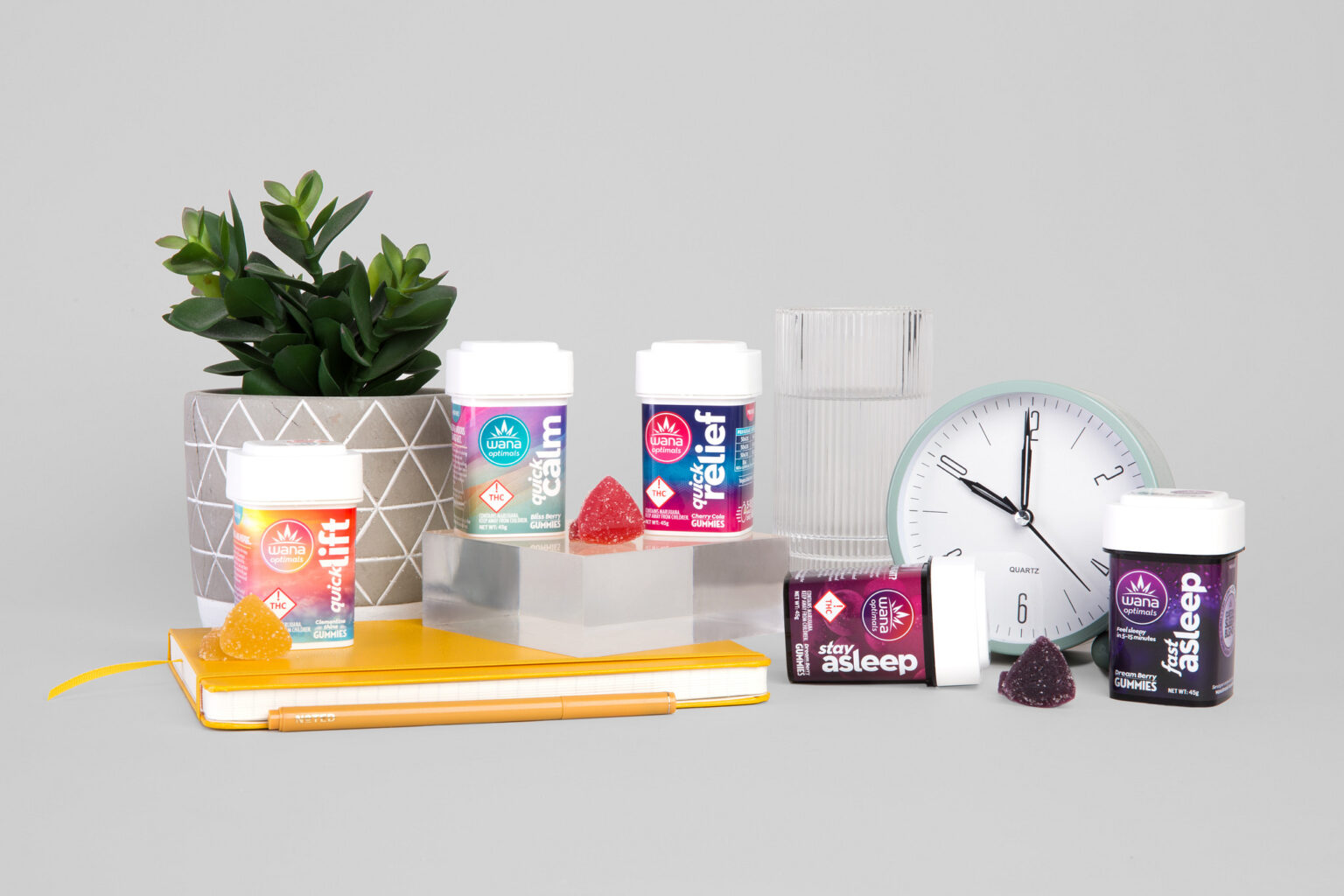
Meet Our Optimals
Wana’s first-of-its-kind “Optimals” line includes five calibrated formulations to help you optimize your life by delivering specific wellness-based effects like better sleep, mood enhancement, and stress or pain relief.
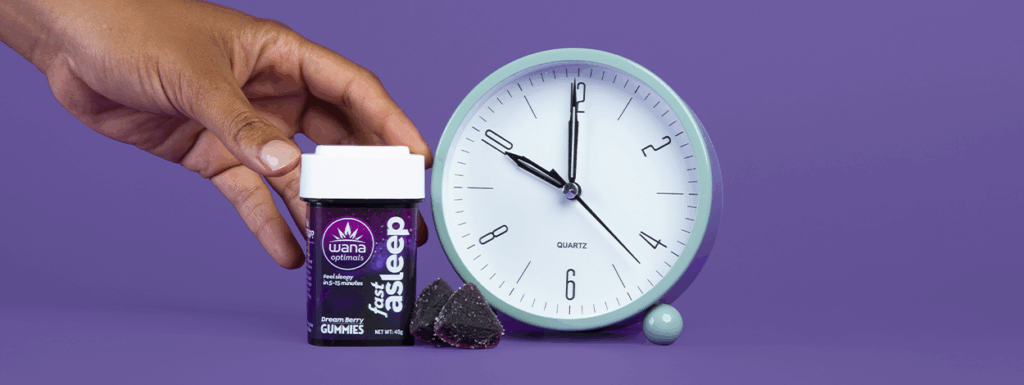
Find OptimalsFast Asleep
Feel sleepy in 5-15 minutes with these non-groggy gummies, powered by a low dose of THC, the calm- and comfort-promoting cannabinoids CBD, CBN, CBG, 1 milligram of melatonin,* and 30+ sedating compounds called terpenes. Ideal for novice consumers, folks who need help nodding off again in the middle the night, or anyone looking to fall asleep faster.
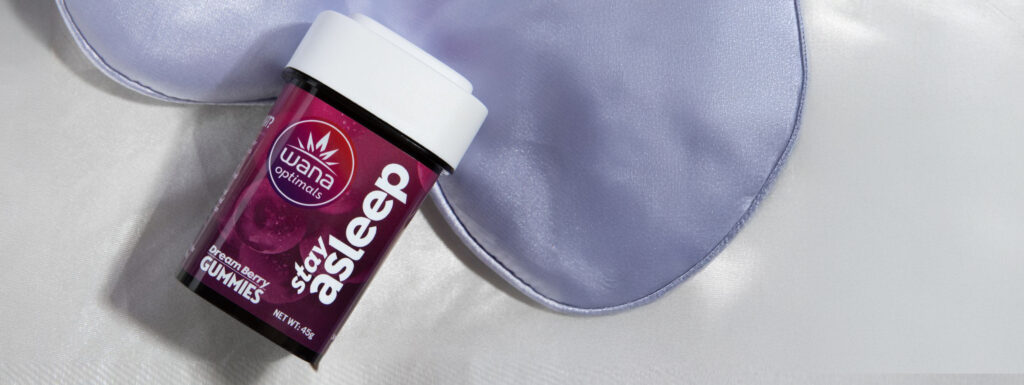
Stay Asleep
A higher dose, melatatonin-free alternative to Fast Asleep Gummies, the Stay Asleep formulation delivers peaceful, long-lasting rest without next-day grogginess. It’s perfect for chronic tossers and turners, experienced canna-consumers with a higher THC tolerance, or those who prefer to avoid melatonin in their sleep products.
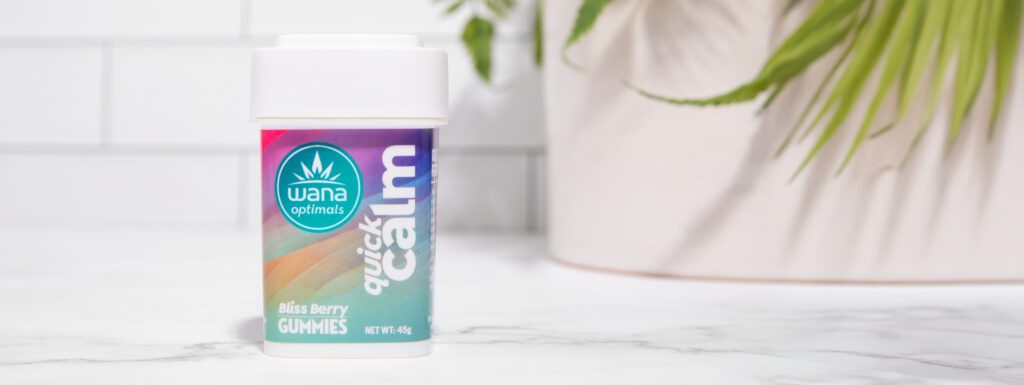
Quick Calm
Stop spiraling thoughts in just 5-15 minutes with these rapid-onset gummies. The Quick Calm formulation is powered by mood-lifting CBG, soothing CBD, and 50mg of the amino acid l-theanine* (also found in green tea!). With just 1mg THC, most people will not feel high after one gummy, so you can take them anytime (and anywhere) you’re feeling anxious.
Quick Relief
Attack your aches from every angle with this fast-acting formulation, which uses an equal dose of THC, CBG, and the rare cannabinoid CBC to support reduced inflammation, regulate the receptors that control physical sensation, and relieving discomfort-related stress.

Quick Lift
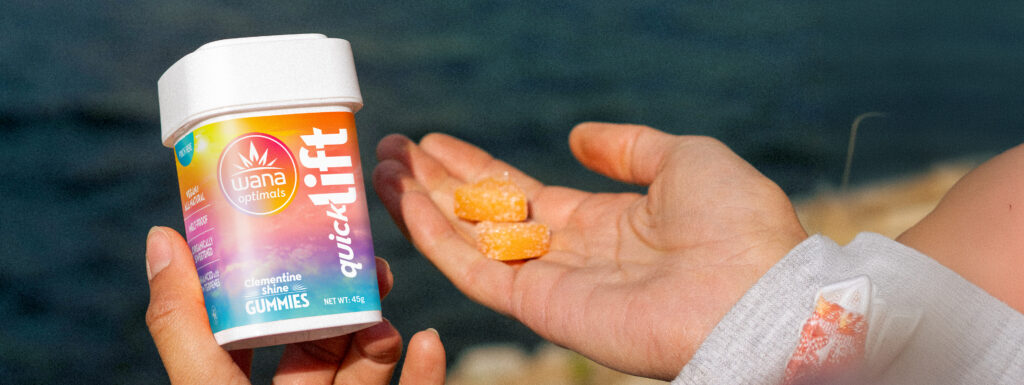
Enhance any moment with these mood-boosting gummies, featuring a blend of THC, CBG, and focus-enhancing THCV to lift your spirits and help you tune into all of life’s little pleasures. Take one for a fast-acting burst of sunshine when you’re feeling down, to loosen up before spending time with friends, or simply to enhance a favorite activity.
*Due to varying regulations, melatonin and l-theanine are excluded in some states. Always review your product label for an accurate list of ingredients.
Wana Know More?


We’re all grown-ups here, right?
We’d better be, since no one under 21 is supposed to be anywhere near this website. With that settled, let’s talk about sex. Or more specifically, cannabis and sex.
Lots of people like to combine the two, claiming that “high sex is the best sex,” or at least a reliable way to spice things up in the bedroom. But does this widely accepted weed wisdom have any scientific basis? Is it purely placebo? Or can cannabis really improve your intimate adventures… and how?

Does cannabis make sex better?
As Barry White would say: “Ohhhhh yeah.”
Anecdotal evidence abounds among those whose sex lives have been revitalized by the wacky tobaccy. But you don’t have to take our word for it. A 2023 study in The Journal of Cannabis Research found that, out of more than 800 participants, over 70% “reported increased desire and orgasmic intensity,” both solo and with a partner.
Since sexuality exists on a beautiful spectrum, it’s important to note that the study included both men and women, ranging in age from 18 to 85, and that at least 25% of participants identified as LGBTQ+. While more women than men participated, the sexy results did not seem to be impacted by the subject’s gender. In other words, weed seems to be a pretty equal-opportunity intimacy enhancer.
Why does cannabis make sex better?
This question is harder to answer. As that same 2023 study outlines, there’s conflicting evidence – and even more conflicting theories – about what’s really going on at a scientific level.
For example, some research suggests cannabis, which dilates your blood vessels, can increase lubrication in vagina-having people, enhancing arousal and reducing potential pain. Then again, a 2019 study in Sexual Medicine found that, while a majority of female respondents reported increased desire and better orgasms after using cannabis, lubrication was not meaningfully impacted. Meanwhile, some evidence suggests weed can help erections last longer, but still other studies seem to indicate that using cannabis habitually can make it harder – erm, that is, more difficult – to achieve the erection in the first place.
In the absence of definitive data, we can’t confidently explain the biological or neurological effect of cannabis on your sex life, but we can make some educated guesses. For one, cannabis tends to enhance sensation by increasing blood flow and stimulating your brain’s reward center. Ever notice how much better food tastes, or how intense that hot shower feels, when you’re under the influence? Extrapolate those enhanced sensations to your bedroom. Need we say more?
Of course, it’s not all about the body. They say the largest sex organ is the brain, and cannabis certainly impacts that. Many people struggle to find sexual satisfaction because they’re too in their heads, anxious about what their partner may be thinking or preoccupied with life outside the here and now. Cannabis can relax you, distract you from your thoughts and let you focus on feeling rather than fretting. Which brings us to our final question…
What are the best cannabis products for sex?
There are a ton of sex-specific canna-products out there, from specific “intimacy” formulations to THC-infused lubricant, massage oil, or bath bombs. Some of these may be just what the love doctor ordered, but you don’t necessarily need a sex-specific product to see results. Here’s an incomplete list of things to consider when selecting your pre-coital cannabis:
- Other compounds! There’s more to cannabis than THC. Rare cannabinoids like CBG can elevate mood and relieve stress, which is particularly helpful if you’re prone to distractions or anxiety during intimacy. You might achieve similar chill through a strain high in terpenes like limonene or linalool, though there is no real scientific evidence as to which specific terps can optimize your sexy times.
- Dose. Paranoia and anxiety are common side effects of too much THC, and paranoia usually isn’t sexy. Stick to a serving you know won’t send you spiraling. If you’re new to the plant, start with a low dose – 2.5 to 5mg of an edible or a single puff of flower – and wait at least an hour (for the edible) or 15 minutes (for the flower) before consuming more.
- Product form. Smoking flower together is a great form of foreplay: intimate, immediate, and fairly easy to control, at least in terms of dosage. But if you’d rather keep your lungs – if not the rest of you – pure and virginal, ingesting your cannabis has plenty of advantages. You’ll have to wait a bit to feel effects, but edibles deliver a uniquely potent THC molecule called 11-Hydroxy-THC, which famously produces a powerful “body high.” Do we need to connect those dots for you? ALSO: if you’re not an experienced consumer, take care with products like infused lubes or bath bombs, which are difficult to dose since they reach your bloodstream through, uh, not the usual entrance.
Bottom line: there’s still a lot to learn about why and how cannabis enhances sexy times. But we can say with confidence that it often does. Until we have more scientific data, you’ll have to conduct your own experiments to find out exactly what kind of weed works best for you. Who knew research could be so much fun?
It happens to the best of us. While cannabis can do a lot of wonderful things, too much of a good plant can sometimes create unwanted side effects, including anxiety and paranoia.
Most of us who enjoy that wacky tobaccy have experienced a bad high at least a few times. The good news is, there are concrete steps you can take to mitigate these bad feelings and get your buzz back on track. Here are 5 helpful tips for when you get too high.

1. Don’t freak out.
Fear is the mind killer. Once you give an over-stoned brain an inch, it can take a long and winding mile, all the way to a full-blown freak-out.
Here’s the thing: you cannot physically overdose on cannabis in the same way you could on cocaine or oxycontin, because there are no cannabinoid receptors in the parts of your brain that control your lungs or cardiovascular system. Uncomfortable feelings are just that – feelings – and feelings are usually temporary.
When the brain weasels start to scurry, whether that means contemplating your pet’s mortality or dwelling on that humiliating faux pas you made in fifth grade, try saying to yourself – out loud, if you can – “I’m safe. I’m ok. I will not feel like this forever.” Take deep breaths, pulling the air all the way into your diaphragm and pushing it back out slowly. Gently rub your arms and chest, almost like you’re giving yourself a comforting hug. Do some stretches or jumping jacks. Anything you can do to take yourself out of your brain and into your body.
Above all else, remember… you’re not dying. You’re just too high.
2. Take some CBD.
Did you know that THC and CBD actually work synergistically within your endocannabinoid system? It’s a phenomenon known as “the entourage effect.” Basically, these two cannabinoids work together by stimulating different receptors in complementary ways, or by stimulating the same receptor in different ways.
THC binds strongly to your CB1 and CB2 endocannabinoid receptors, producing a range of effects including euphoric intoxication, appetite stimulation, sedation and, in too-high doses, sometimes anxiety. CBD, which is much loved for its anti-inflammatory and stress-relieving properties, may temper some of THC’s less desirable effects. In addition, CBD is believed to stimulate 5-HT1a receptors, which can increase levels of stress-relieving serotonin.
All this to say: there is a very scientific reason for keeping some CBD (or Wana Optimals Quick Calm Gummies) on the shelf, and reaching for it anytime you’ve had too much THC.
3. Drink water.
Some people think lots of water can flush THC out of your system. Jury’s kind of out on that – unfortunately, guzzling H20 is not likely to help you pass your next drug test. But dehydration can significantly exacerbate anxious feelings, so keeping yourself watered is a good way to keep yourself calm. Also, having a simple, physical goal like, “I want to drink this whole glass of water in the next thirty minutes,” can help you focus enough on the here and now to slow those spiraling thoughts.
4. Eat smart.
When you’re feeling sad or stressed, it’ tempting to reach for your favorite comfort food. But that bowl of mac and cheese might do your high more harm than good. That’s because THC binds to fat. The more fatty food you have in your system, the more those molecules have to grab onto and the longer your bad high will last.
On the other hand, there are some foods that can actually counteract THC-induced anxiety. Lemons, which are chock full of the terpene limonene, are one of these. Black peppercorns are another, because they contain high levels of a terpene called beta-caryophyllene. Like CBD, these handy plant compounds can temper the unwanted side effects of THC.
5. Retreat to the comfort zone.
The comfort zone looks different for everyone. For some, it’s calling a close friend for reassurance. For others, it’s holing up in a quiet room to watch Jurassic Park for the 507th time. The point is to do something, go somewhere, or speak to someone who makes you feel safe and grounded.
And if all else fails, try going to sleep! We promise you’ll feel better in the morning.
Terpenes: either you love them, or you don’t know what they are yet.
If you fall into the latter camp, we’re here to help. Terpenes are aromatic chemical compounds that give all plants – not just cannabis – their distinct taste, smell, and effects. They’re responsible for scents like pine and lavender (they’re often used to make air fresheners!) as well as the bitter taste of the hops in your favorite IPA.
When it comes to cannabis, terpenes are a big part of the reason some strains make you feel sleepy or subdued, while others might set your mind racing with inspiration. We’ve rounded up a few of the most commonly asked questions (and answers) about how terpenes work, whether they affect your edibles, and why Wana puts more than thirty of them in almost every Gummy we make.

Can Edibles Contain Terpenes?
Terpenes occur naturally in the cannabis plant, which means that every strain of flower you’ve ever smoked has been chock full of them. But some people don’t believe terpenes can be present in edibles. Thankfully, science says otherwise!
The misconception that edibles can’t contain terpene probably comes from the fact that most commercially available edibles are made using THC distillate. This means that manufacturers isolate – or literally distill – the THC or other cannabinoids from the plant, a process which strips away the terpenes and other additional compounds.
But good news: it’s possible to reintroduce these terpenes at a later stage of the cooking process, as long as temperatures remain below the terps’ boiling point. We’ve even tested this with our own gummies – each of which includes a proprietary blend of 30+ reintroduced terpenes. Partnering with our friends at Niva Labs, we took samples of our gummy mixture every 2 minutes as it cooked, from the moment the terpenes were added until after the gummies were cooled and ready to eat. Niva’s analysis found NO meaningful degradation of terps – they were present in the same concentration and ratios at the end as they were at the start.
Bottom line: terpenes don’t “naturally” occur in distillate edibles the way they do in flower. But once they’re invited in, they make themselves right at home.
But Do Terpenes Actually WORK in Edibles?
Some people argue that, even if terpenes can be added to distillate gummies, they won’t have the same effects as when you inhale them. Admittedly, there’s not a lot of research on this question, especially when it comes to the terpenes found in cannabis.
That said, there have been numerous peer-reviewed studies about how terpenes affect you when ingested in non-canna contexts… and we’ve got no reason to believe terps would behave any differently in edibles than they would in orally administered supplements. A few examples”
- THIS STUDY demonstrates the presence of terpenes in the blood after oral administration of Mastiha (a Mediterranean plant that produces terpene-rich resins).
- THIS ONE suggests that the terpene linalool has a clinical impact on lessening anxiety when orally ingested.
- And THIS ONE orally administered the terpene citral to lab rats. It found 10% of the original terp dose in the rats’ blood after ingestion. Which may not seem like much, but it’s actually about the same amount you’d see from orally ingesting cannabinoids like THC.
Although more research is needed, existing evidence seems to indicate that reintroduced terpenes can still deliver unique effects (like relaxation or inspiration), even when they’re ingested rather than inhaled.
Are Cannabis-Derived Terpenes Are Better than Botanically Derived?
The short answer is: no.
“Cannabis-derived terpenes” refers to terps that have been extracted directly from a cannabis plant. “Botanically-derived terpenes,” on the other hand,” can be extracted from any plant – like fruit or hops or pine.
Some people think that cannabis-derived terpenes deliver a better experience. But this simply doesn’t make sense. On a molecular level, terpenes are the same no matter where they come from – for example, the compound linalool produces the same effects whether you extract it from a lavender plant or a field of Kush. The kind of plant you extract the terpene from won’t make a difference as far as how the terps ultimately make you make you feel.
And actually, there’s a pretty big disadvantage that comes with using terpenes derived only from cannabis. For one thing, they’re harder to come by, which can cause supply issues and price markups. For another, cannabis strains evolve slightly from harvest to harvest – meaning that the terpene profile of even one specific strain might change over time. So to use only the terpenes extracted from that strain might produce different effects with each new batch of edibles.
At Wana, we want to offer our customers consistent results every time. While our terpene blends do mirror the combinations found in leading Sativa, Indica, or Hybrid cannabis strains, we derive the terps themselves from botanical sources like fruit. Unlike a cannabis crop, botanical sources provide us with an unlimited supply of the terpenes we need. They also allow us to recreate the same precise combinations – and, by extension, their effects – over and over again.
How Does Wana Select Terpenes?
Wana’s distillate gummies come in three class-specific proprietary blends – relaxing Indica, uplifting Sativa, and Balanced Hybrid. Each contains more than 30 unique terpenes in various formulations – up to 5x more than most competing brands.
When Wana’s Innovation team was first developing these recipes, they partnered with a leading terpene research company called Abstrax. Together, the teams interviewed some of California’s most knowledgeable budtenders about their favorite indica, sativa, and hybrid cultivars.
Abstrax then analyzed the terpene profiles of those cultivars and used their findings to build three class-specific formulations based on their findings. Thus, our beloved custom terpene blends were born!
At the end of the day, we just love terps and want our customers to experience all the nuance they can bring to an edibles experience. If you’ve got more questions, feel free to ask using the chat feature on our homepage, or just DM us on Instagram at the handle @wanabrands.
We promise, we’re always ready to talk terpenes.
Did you ever wonder why cannabis makes you feel high? Or why a well-timed edible gives you “the munchies,” or helps you sleep, or soothes your aches and pains, or any of the countless other benefits our favorite plant can offer?
The answer is complicated… but not as complicated as you might think. Cannabinoids like THC and CBD affect your body in specific ways because your body comes ready-made to receive them via a biological network that scientists call the endocannabinoid system.
The endocannabinoid system, or ECS, is a complex collection of receptors and transmitters that work to keep the body “homeostasis,” or balance. Understanding cannabis impacts this system – how it can help or impair that state of balance, and which cannabinoids will produce which effects – can empower you to make more intentional, informed decisions about the plant products you consume.
How the Endocannabinoid System Works
Your endocannabinoid system is operating all the time, not just when you’re under the influence of cannabis. In fact, even people who’ve never consumed THC have an endocannabinoid system!
The endocannabinoid system regulates many of your body’s functions – including sleep, appetite, pain, inflammation, and stress – by helping to modulate the signals flying around your body’s internal comms system. Remember, your ECS’s goal is to maintain balance, keeping you floating comfortably in what some researchers call “The Goldilocks Zone:” not too hot or cold, not too hungry or full, not too sleepy or wired, etc.
For example, if you’re sore after a workout, transmitters within your ECS might interact with your pain receptors to say, “We hear you, our muscles need a break – stop with the pain signals, please!” Other messages the ECS might deliver are: “Time for bed,” or, “We are not in danger, please calm down,” or, “We should eat a snack.”
The goal with all this intra-you communication is to keep your body’s systems in a state of relative harmony. But we all know that nobody’s body exists in this regulated sweet spot all the time. So what happens when the ECS falters, and the balance is thrown off?
(Spoiler alert: this is where cannabis comes in.)
Two Types of Cannabinoids
When most of us hear the word “cannabinoid,” we think of the famous plant-produced ones like CBD or THC. But in fact, a “cannabinoid” refers to any molecule that interacts directly with the receptors of your endocannabinoid system. Your body makes plenty of (non-intoxicating) cannabinoids on its own – these are technically called “endocannabinoids.”
THC, CBD, CBG, and other plant-derived cannabinoids are technically classified as “phytocannabinoids.” Plenty of people consume these purely for fun, but they can also give your endocannabinoid system a helping hand when balance, or homeostasis, is proving hard to maintain.
For example, maybe your ECS isn’t properly signaling bedtime, which means you’re not getting enough sleep. Phytocannabinoids like the ones in Wana Optimals Sleep Gummies can help make you drowsy. On a more serious note, let’s say you’re receiving a medical treatment, like chemotherapy, that makes you more nauseated than your ECS is equipped to handle alone. The phytocannabinoid THC can come to the rescue, interrupting those queasy-making internal signals and even helping to stimulate appetite.
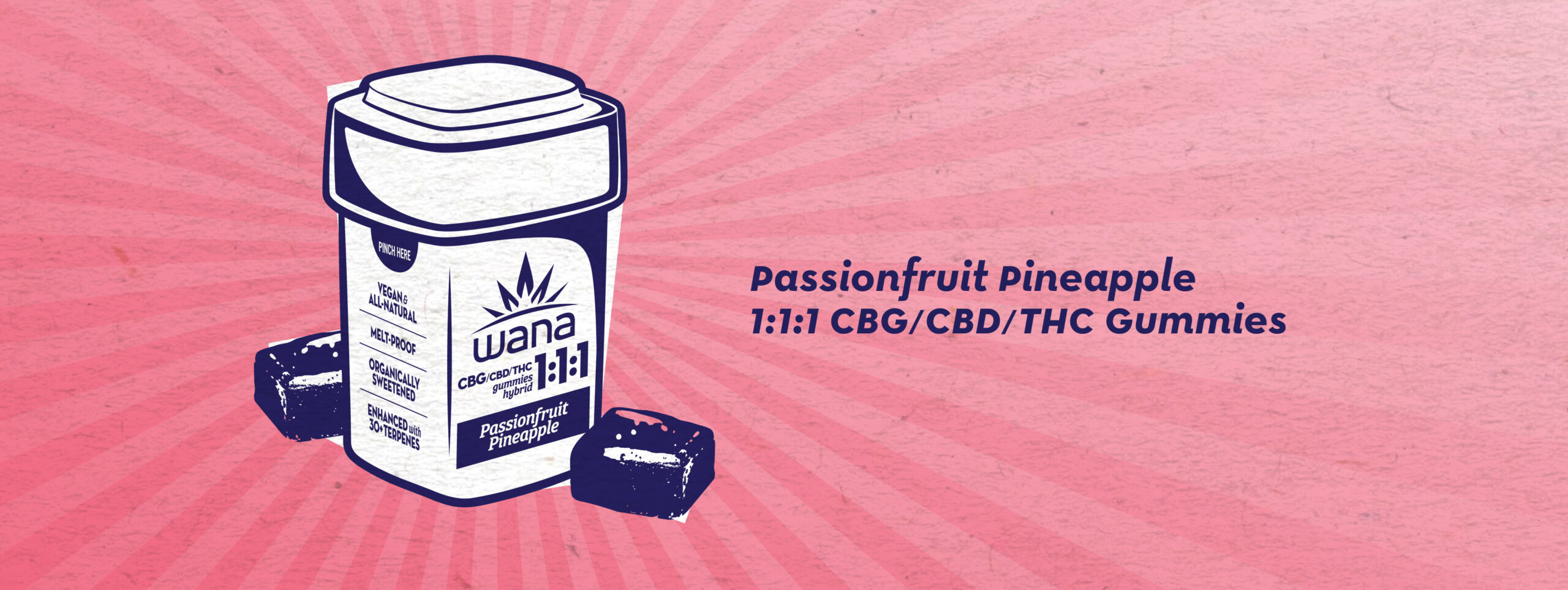
It’s also worth noting that different phytocannabinoids can work together synergistically, often more effectively than they can work alone – a phenomenon known as “the entourage effect.” This is why products containing multiple cannabinoids, like Wana’s 1:1:1 CBG/CBD/THC Gummies or THCV-infused Quick Lift Gummies often have different effects than those with just THC or CBD alone. In fact, the Wana team often recommends that those nervous about trying THC begin with a ratio product like these, because non-intoxicating cannabinoids can help prevent some of THC’s less desirable side effects, like anxiety.
Hacking Your Endocannabinoid System
Ok, “hack” is a strong word. But now that you understand how the ECS works, you may find it easier to choose plant products that will deliver the precise effects you’re looking for.
If you’re shopping for Wana Gummies, a lot of the work is already done for you. You can filter by desired effect on our All Products Page, and we’ll show you the Gummies Wana has already calibrated – using rare cannabinoids, terpenes, and other functional ingredients – to deliver those effects. You can also check out Wana’s hemp marketplace at shopwanderous.com to learn which products can actually ship to your door.
But even if you want to venture outside of Wana World, you can still seek out the best products for an ECS assist by brushing up on which rare and minor cannabinoids tend to produce which specific wellness effects. Our sister site, Wanderous, has recently published a helpful guide to some of the most common rare and minor cannabinoids.
By understanding more about the way your body works, and how different cannabinoids might impact it, you’ll always be able to cut through the noise and find the formulation that’s right for you. After all, the power was inside you all along!
It’s a great time to be an impatient edibles lover, with so-called “fast-acting” or “rapid-onset” infused products available in dispensaries all over the country.
The trouble is, different brands have different definitions of “fast-acting.” For Wana, it means delivering effects in 5-15 minutes. For many others, it means closer to 20 or 30… and even that may be a generous estimate.
That’s because there’s more than one way to speed up your weed gummies’ onset time. We’re here to pull back the curtain on two of the most common rapid-onset techniques, explain why some edibles are faster than others, and highlight green flags to look for when you don’t want to wait to feel effects.
TiME is On Our Side: Fast-Acting Tech for Fast-Acting Gummies
Wana’s R&D team spent a full two years looking for the perfect partner to get our edibles up to speed. At last, we learned that industry-leading tech company Azuca had recently developed an innovative “nano-encapsulation” technology known as TiME.
TiME – which stands for Thermodynamic individual Molecular Encapsulation – works by enclosing teeny tiny plant molecules in a thin, water-soluble layer. This is helpful because the human body is made up of around 70% water, while cannabinoids like THC are actually very fatty. As we know, water and fats don’t tend to mix, so it’s hard (and time-consuming) for your body to absorb the cannabinoids in traditional edibles.
With TiME, however, the water-soluble layer acts as a kind of disguise that tricks your body into thinking the THC is more watery than it is. This makes absorption much easier and faster, so the cannabinoids hit your bloodstream – and, as a result, start making you feel high – in around 5-15 minutes.
“Nano” Is a Relative Term: Why Some Edibles Aren’t as Fast as They Claim
We mentioned above that TiME utilizes a technique called “nano-encapsulation.” If you dive any deeper into what makes other fast-acting edibles tick, you’ll see the first part of that word – “NANO” – a lot.
“Nano-particles” are central to how most cannabis companies try to speed up their edibles. The idea is to break larger molecules into super small pieces – so small that they can actually slip between the cells comprising your mucus membranes and slide straight into your bloodstream. In theory, this is a pretty ingenious method!
The problem is, for something that means REALLY SMALL, “nano” is a surprisingly broad term. By definition, a particle must be smaller than 1000 nanometers to officially be labeled “nano.” But typically, only particles smaller than 100 nanometers are able to sneak between your cells and into the bloodstream.
If you see the term “nano” on a label or website, you can be pretty sure the product is at least intended to be fast-acting. And breaking molecules down into smaller pieces DOES make them easier to absorb – so it’s likely that these products will have a faster-than-average onset time, often in the 30-minute range. But if a company’s definition of “nano” doesn’t take that 100nm threshold into account, the product’s onset might be more accurately described as “brisk” than “fast.”
The good news is, the encapsulated particles in Wana Quick gummies are just about as “nano” as you can get, at only about 2.5nm in size. That’s how we can guarantee they really are some of the Fastest Edibles in the West… and everywhere else too.
Encapsulation v. Emulsion: Which is Better for Fast-Acting Edibles?
We’ve told you how Wana Quick achieves its speed, but nano-encapsulation is just one of the many techniques canna companies – and even many mainstream pharmaceutical brands – can leverage for faster onset times. The other big one is called “nano-emulsion.”
An “emulsion” is what happens when you manage to blend an oil-based substance and a water-based substance into one cohesive mixture. Ever make your own vinaigrette? When you add vinegar, oil, and your other ingredients to a bottle, the oil separates and rises to the top. But if you shake the bottle vigorously, you can achieve a temporary emulsion, mixing all the molecules together into one delicious dressing.
When a canna company uses a nano-emulsion to create faster absorption, they typically use an “emulsifier,” such as a fatty egg or soy substance, to form loose hydrogen bonds between the fatty nano-molecules of THC (the oil) and the water molecules in your body
(the vinegar). These bonds can temporarily help with faster absorption, but they’re not very strong and usually break apart during digestion.
Despite the fragility of hydrogen bonds, nano-emulsion is often an effective way to speed up onset times, especially when used in beverages. In fact, nano-emulsion powers the fast onset of Wana’s sparkling hemp drinks – which, by the way, can be ordered straight to your door in many states.
That said, Wana Quick Gummies are made using a slightly different technology. Rather than establishing those loose hydrogen bonds, TiME’s nano-encapsulation creates a much stronger shell made of water-loving particles joined by very strong covalent bonds. Think of a nano-emulsion as covering the THC molecules in a stuck-together Post-Its, and a nano-encapsulation as enclosing them in a Kevlar body suit.
Combined with the super small 2nm size of our nano-particles, nano-encapsulation allows for rapid absorption, just as with nano-emulsions. But because our encapsulations are so strongly bonded together, they also allow Delta-9-THC molecules to reach your bloodstream fully intact, unchanged by the metabolic processes that impact most other ingestible cannabis products. As a result, the effects you feel from Wana Quick are really unlike any other edibles experience – a lighter, more cerebral high that many people associate with smoking. That’s a topic for a future blog post, though.
Find Your Fast: What Makes a Good Fast-Acting Edible
Knowing how this kind of technology works can empower you to choose the most reliable and effective rapid-onset cannabis products. It’s always important to remember, however, that everyone’s body is different, and there are a number of factors – including weight, age, and experience – that may impact how quickly you feel effects. Even Wana Quick – which you can find in licensed dispensaries across the country or order online from our hemp marketplace – can have a delayed onset when consumed after a heavy meal.
The best way to find a fast-acting product that works for you is to try a few, and to make note of how fast they worked, how they made you feel, and any environmental factors that may have impacted the experience. Hopefully, this article has given you a good place to start.